



THANK YOU FOR SUBSCRIBING
A robot joint has to do more than turn. A servo motor may run at above 3,000 rpm while the arm itself needs slow, controlled movement with high torque and minimal mechanical play. The transmission between them determines whether the robot can repeatedly reach the programmed position or introduce positioning errors every time the direction changes. Shenzhen Picea Motion Technology addresses this challenge at the transmission level. Founded in 2015, the company develops and manufactures precision harmonic drives for industrial robots, collaborative robots, semiconductor equipment and other high-accuracy machinery. Its role in robotics is specific but critical: convert fast motor rotation into controlled joint movement without adding the size or backlash that can compromise a compact robotic arm. Because the mechanical demands vary from one robot joint to another, the transmission cannot follow a one-size-fits-all design. Some axes need a conventional compact reducer and others require a hollow center for cables or air lines, while wrist joints may have little axial space available. Rather than forcing one reducer geometry across the entire robot, PICEA offers cup-type, hat-type, hollow-shaft and super-flat configurations that allow each reducer to fit the space, routing and mechanical requirements of the joint in which it operates. Turning Speed into Controlled Motion A harmonic drive uses a wave generator, flexspline and circular spline to create reduction through controlled elastic deformation. The mechanism can deliver a high ratio in one stage while keeping input and output coaxial. An industrial robot can use a fast, compact motor while the joint receives the slower, higher-torque motion needed to position the arm accurately. PICEA has single-stage reduction ratios from 30:1 to 160:1 for industrial robot applications. It also reports backlash below one arcminute for its harmonic reducers. That low level of lost motion becomes especially important when the arm changes direction. During welding, assembly or other programmed tasks, the end effector may need to return to the same position repeatedly, and excess backlash can introduce positioning errors with each reversal.
Industrial automation has made operations smarter and more connected, but safety still depends on how effectively people interpret and act on information. As data volumes grow, the priority is to create a shared operational understanding and deliver critical information to the right people at the right time. Guided by this reality, THT-EX has applied more than two decades of engineering expertise to developing Intelligent Visual Safety Systems that transform complex operational information into clear visual communication. Today, this Taiwan-based company delivers integrated solutions spanning explosion protection, electrical systems, power distribution, and AI infrastructure for industrial and hazardousarea applications. “Our engineering begins with real industrial demands, and we believe innovation succeeds only when it makes industrial operations safer, more reliable, and easier for people to understand and manage,” says Peter Chen, founder and CEO. This engineering-first philosophy shapes every aspect of THT-EX’s work, from product development and certification to manufacturing and integrated electrical solutions. The company’s innovations have emerged from real industrial challenges, leading to high-temperature explosionprotected lighting, explosion-protected UVC lighting, and specialized industrial technologies..
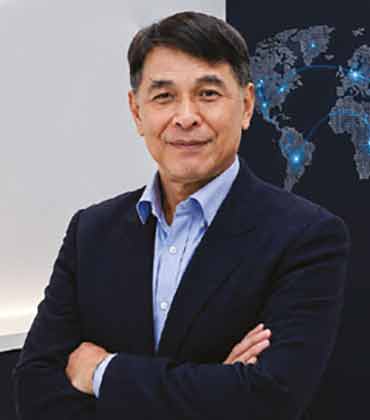

CSI is leading a tangible shift in industrial control systems. It specializes in open standards-based architecture built on the Open Process Automation Standard (O-PASTM) that replaces closed, vendor-specific platforms. By participating in the Coalition for Open Process Automation (COPA), CSI brings COPA Control System, the first commercially available O-PAS based control system that offers modularity, interoperability and cybersecurity. The COPA Control System integrates OT and IT components and is tailored to each site’s specific needs. By removing vendor lock-in, lowering the total cost of ownership and strengthening cybersecurity, CSI enables the adoption of technologies such as fast-cycle-time Model Predictive Control and artificial intelligence. In addition, CSI supports clients with a full range of services, including consulting and training, specialized engineering services and process control software that help organizations design, deploy and scale O-PAS systems effectively. “The significance lies in reducing the risk of new technology adoption. Customers can be confident they are not engaging with untested or experimental solutions, as the products involved are already proven and supported by established suppliers,” says Don Bartusiak, President. WHY OPEN SYSTEMS MATTER In 2009, ExxonMobil faced an estimated $5 billion undertaking to upgrade its refining and chemical control systems; these were basically non-return projects. After discussions with major suppliers, the team concluded it did not matter which vendor the company purchased from, since the proprietary systems were not interoperable. The O-PAS Standard defines an open architecture that treats control functions as plug-and-play components. This enables targeted upgrades rather than costly full-system replacements and allows operators to select the most effective solution for each need. CSI and its partners are putting this approach into practice by integrating field-proven hardware and software with the open architecture, verifying conformance and interoperability through independent testing and delivering site-specific systems that evolve without vendor lock-in.
Smart manufacturing leaders need real-time, scalable solutions to navigate increasingly complex factory environments where every second counts and every decision impacts efficiency, quality, and cost. Massive data streams are constantly generated, but without the right tools, converting them into actionable insights is slow, costly, and error-prone. The future lies in solutions that converge AI and OT to streamline workflows, improve decision-making, and move factories closer to true autonomous manufacturing. TEIA rises to this challenge. Evolving from a traditional OT-focused quality platform provider, the company has become a future-ready, AI-driven enabler of autonomous manufacturing. By converging AI with operational technology (OT), it empowers manufacturers to monitor, analyze, and optimize production environments with speed, precision, and confidence. “We are the preferred choice of customers because of our ability to propose and integrate various technologies for immediate action. Our expertise in creating customized smart factory solutions makes us more attractive,” says Choon Jae Lee, CEO. Customer-Centric Solutions and Proven Capabilities TEIA’s clients consistently cite three drivers of loyalty: real-time problem-solving, integrated OT-IT expertise, and a culture of accountability to the shop floor. Rather than simply delivering solutions, TEIA acts as a technical partner, addressing core production challenges and generating measurable gains in productivity and quality. Founded in 2015 to bridge OT and IT, TEIA addressed a critical gap: few IT experts understood the complexity of automotive production, and traditional MES platforms failed to unify fragmented “islands of information.” Its mission was to enable real-time, data-driven production. Over time, TEIA expanded from quality-focused OT systems to IoT device development and integrated solutions for vision inspection, fluid dispensing, and holistic quality management—setting the stage for autonomous, intelligent manufacturing. At the core is TEIA’s S-OTPlat platform, which integrates IoT devices such as S-Tag, S-Anchor, and Smart Connector to capture real-time data from equipment, products, and environments. Its RTLS tracks assets with high accuracy via UWB and BLE, with hybrid indoor/outdoor modules in development for complex factory zones. S-OTPlat also features AI video inspection, 3D digital twins for visualization and simulation, and integration with PLC, MES, and ERP systems—including legacy equipment—enabling digital transformation without disruption.

Ceramic

Ari Wibowo, Lean and Advanced Manufacturing Senior Manager, New Balance
Smart Factory

Carl Budd, Engineering Manager, Moose Toys
Industrial Automation

Ivor Castelino, Energy Transition Leader - Biogas and Carbon Capture, Bloom Energy
Industrial Automation
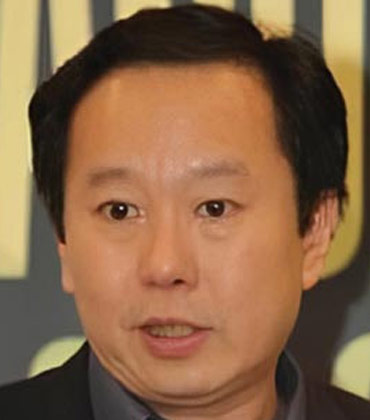
Erik Looi, Chief Digital Officer (CDO), AllianceCorp Manufacturing Sdn Bhd
Industrial Automation

Dashiell Sklenar, Product Manager - Generative AI, Weyerhaeuser

3D Printing
Danny Kohanek, SVP of Manufacturing, SUMCO

Industrial Automation
Barb Murawski, Director of Materials, Planning & Logistics, Anchor Mfg. Group
Integrated hazardous area solutions improve efficiency, compliance, and long-term industrial performance across APAC.
Industrial robotics in APAC is advancing through flexible automation, connected systems, AI, machine vision and smarter solutions that improve manufacturing efficiency.
Engineering The Next Chapter Of Apac Manufacturing
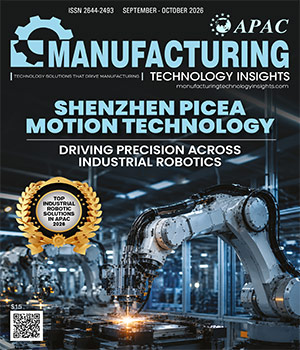
Our cover story features Shenzhen PICEA Motion Technology, named Top Industrial Robotic Solutions in APAC 2026, for its focus on precision motion in industrial robotics. Its harmonic drive technology supports robotic and automated equipment where compact design and precise movement are essential, helping address the transmission demands of modern robotics.
THT-EX, recognized as the Top One-Stop Hazardous Area Solutions Provider in APAC 2026, brings the same engineering focus to industrial safety. Its work spans explosion protection, waterproof electrical systems, power distribution and AI infrastructure. Its Intelligent Visual Safety Systems help connect machines, sensors, automation systems and control rooms, turning complex information into something people can quickly understand and act on. Its use of precision machining, robotic automation and rigorous testing reinforces that focus.
The issue also brings perspectives from various manufacturing leaders. Ivor Castelino, Energy Transition Leader - Biogas and Carbon Capture, Bloom Energy, looks at the growing power demands facing waste-to-energy projects and the role onsite generation can play. Danny Kohanek, SVP of Manufacturing, SUMCO, explains how planning, process control, maintenance and employee training come together to produce specialized silicon at industrial volume.
Together, these stories show how sound engineering, practical thinking and strong leadership are shaping the future of manufacturing. We invite readers to explore the issue and discover the ideas, technologies and people moving APAC manufacturing forward.

Manufacturing Technology Insights Weekly Brief
Be first to read the latest tech news, Industry Leader's Insights, and CIO interviews of medium and large enterprises exclusively from Manufacturing Technology Insights
