

THANK YOU FOR SUBSCRIBING
A featured contribution from Leadership Perspectives: a curated forum reserved for leaders nominated by our subscribers and vetted by our Manufacturing Technology Insights APAC Advisory Board.


When I joined our manufacturing operation in Orlando a few years ago, I was amazed at the innovative culture and mastery of day-to-day operations. The team planned out every activity in incredible detail, down to the minute, if not the second. I couldn’t imagine improving on that level of execution.
But as the plant’s first full-time strategist, I saw an opportunity to get even more out of everyone’s capabilities.
The key was to complement operations acumen with a long-term strategic mindset. Developing our vision and using it as a guide would help channel and prioritize our day-to-day efforts, making us even more agile and resilient — huge advantages when navigating today’s dynamic technology trends and market conditions.
Traditionally, manufacturers are driven to maintain margins by cutting costs and doing more with less. Such attention to detail is critical, but it’s no longer sufficient. If a manufacturer focuses too much on the short term, they may miss out on long-term opportunities that aren’t immediately obvious, especially those that require capital investment. Bringing in a strategist can help manufacturers identify wise spending choices for the long term, helping them invest effectively in new technologies and capture strong ROI.
Building a business case for breakthroughs
Conventional wisdom says manufacturers should keep their machines running as long as possible, waiting to invest in new units until the old ones die. Saving on immediate capital costs has clear benefits, but it isn’t always optimal. Strategists can help identify the best time to replace machines that are still in working order but are less efficient or productive than alternatives. They can also work with management to get beneficial but complicated and expensive projects off the ground.
“Strategists can help identify breakthroughs with the potential to radically reduce costs and make a compelling case for implementing them”
For example, our plant makes state-of-the-art gas turbines with blades and vanes that rotate at high speed in extremely high temperatures. Those components have 1/16-inch cooling holes that need to be cleaned periodically – not an easy job. We’ve always struggled to find and keep the people – we call them “blenders” – who can do this skilled but repetitive work. The problem got worse when the pandemic triggered a labor shortage.
The operations team had explored a robotic solution years earlier, but the project never got off the ground. The strategy team revived the idea by developing a business case that highlighted the ongoing value of this one-of-a-kind robot, and ultimately helped secure the funding. Now a critical job will get done with remarkable precision, thanks to the latest computer vision and laser-guided technology, at a pace that doesn’t slow production and will save consumable costs to provide a healthy ROI. Meanwhile, we’ll build experience in automation and budgeting for large-scale projects, both of which will help us continue to design and implement valuable projects in the future.
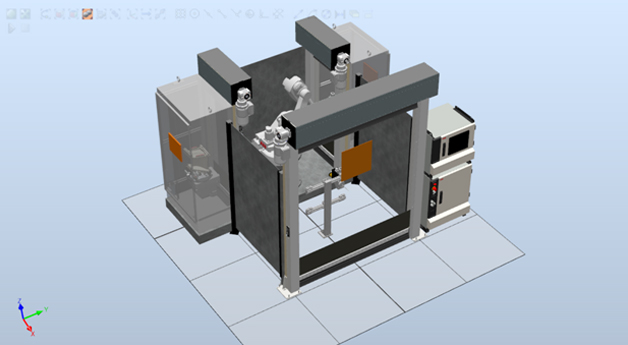
With the strategy team’s assistance, Mitsubishi Power invested in a novel robotic system to clean the cooling holes in turbine blades and vanes and eliminate previous production delays.
Finding opportunities in the big picture
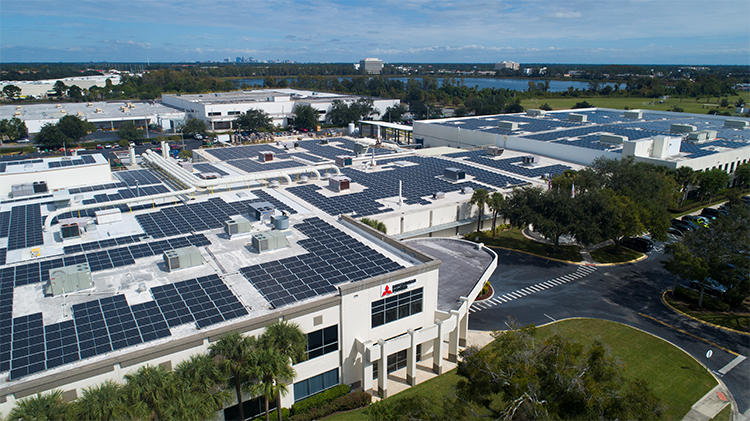
A strategic mindset can help with much more than production-line bottlenecks. Strategists can also find opportunities in broader market trends. For example, sustainability standards and aspirations are forcing companies to think more carefully about the ways their manufacturing processes affect people and the environment. Strategic decisions to explore incorporating renewable electricity may help reduce emissions while saving on power. When our team studied the potential cost savings of rooftop solar, we found that a 1.75-megawatt system would fit on the rooftop of the facility and yield returns of 10%-12% every year in savings.
At Mitsubishi Service Centre in Orlando, the strategy team championed a sprawling rooftop solar system.
To stay at the forefront of technology, you have to stay abreast of fast-evolving technologies like artificial intelligence (AI) and understand recent breakthroughs such as ChatGPT to assess their potential use. We’ve already begun to invest in predictive analytic sensor technology in anticipation of switching from reactive to proactive maintenance, which incorporates machine and algorithm learning. This shift is key to our long-term strategy. When you wait and react to an unexpected maintenance issue, you create cascading problems, from planned labor that’s suddenly unable to work, expedited and pricier shipping for parts and materials and strained relations between operations and maintenance teams, which erode the trust between them. But a proactive approach leverages AI to analyze real-time data and identify equipment issues before they occur. This allows teams to plan for any necessary downtime and align on priorities.
Broadening the scope of risk assessment
Strategists also approach risk analysis from a different perspective, looking at interconnected processes across a facility. For example, when we assessed an aging acid-stripping line, we noted that a failure could have knock-effects far beyond the line itself — to the point that it could shut down our operations. With this insight, we decided to build a new line in parallel, incorporating new technologies and built-in redundancies to run more efficiently and reliably. Our risk assessment demonstrated that this option, while expensive, provided the greatest value given the potential downside of outsourcing alternatives. Today, we’re better equipped to service all the parts in our operation that need stripping, and we’ve mitigated the risk of a single-point failure that could grind production to a halt.
As the world becomes less predictable and technology continues to change rapidly, it’s more important than ever to be flexible and forward-looking. Strategists can help advocate for identified breakthroughs with the potential to radically reduce costs and make a compelling case to change obsolete mindsets in order to implement those breakthroughs. Having an effective champion of ideas in place — someone thinking like a strategist — can augment a relentlessly creative and innovative culture with a steady stream of possibilities to consider, vet, and develop.

Manufacturing Technology Insights Weekly Brief
Be first to read the latest tech news, Industry Leader's Insights, and CIO interviews of medium and large enterprises exclusively from Manufacturing Technology Insights
