

THANK YOU FOR SUBSCRIBING
A featured contribution from Leadership Perspectives: a curated forum reserved for leaders nominated by our subscribers and vetted by our Manufacturing Technology Insights APAC Advisory Board.

Ai-Driven Manufacturing Leadership and Net-Zero Goals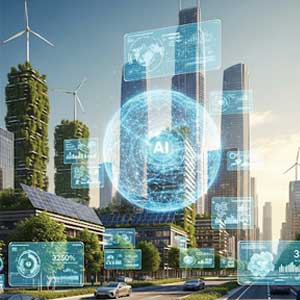
Daniel Kebriti
Sustainability efforts relied on periodic assessments, static models, and manual reporting. AI has disrupted this approach with real-time analytics, predictive capabilities and autonomous systems that optimise resource usage and minimize waste.
One of the most revolutionary applications is in energy management. AI algorithms can forecast energy demand and analyse consumption patterns, helping reduce peak loads and shift usage to off-peak times.
Another key area has been in predictive maintenance, where AI is used to anticipate equipment failures before they happen, extending asset life and reducing downtime and energy wastage.
Supply chain optimisation has also benefited from AI. By analysing variables such as transportation routes, material sourcing and production scheduling. Beyond operational efficiency, AI streamlines environmental, social, and governance (ESG) reporting by automating data collection, standardisation and analysis. It reduces manual workload, increases accuracy, and supports compliance with international sustainability framework.
Overcoming Key Barriers to Ai Adoption
Implementing AI typically requires significant upfront investment in technology infrastructures, which can be a major barrier for small to mid-sized manufacturers. To address this, many companies are starting with focused pilot projects aimed at quick wins, such as energy optimization or predictive maintenance before scaling up. Leveraging government grants can also help spread costs and reduce the need for heavy capital investment.
Another major obstacle is the talent gap. Deploying and managing AI systems requires very specialised skills and expertise that many traditional manufacturers lack. In response, organisations are implementing employee upskilling programs, partnerships with universities and AI vendors and adoption of no-code platforms that enables non-technical staff to utilise AI tools effectively. The third big challenge is dealing with legacy wequipment and disconnected system that doesn’t support data collection and limits AI’s effectiveness. These barriers can be mitigated through addition of IoT sensors to older equipment, adoption of edge computing to handle data locally and using open-architecture platforms.
Beyond these core issues, manufacturers also face hurdles like inconsistent data quality, internal resistance to digital change and cybersecurity risks.
"AI changes the game by enabling real-time visibility, predictive insights and intelligent automation, allowing manufacturers to lead with innovation rather than simply reacting to changing legislation."
From Compliance to Innovation With Ai
Sustainability in manufacturing has focused on meeting regulations and reducing compliance risks, through periodic reporting and incremental improvements. While necessary, this compliance-focused model tends to be backward-looking and limited in scope. AI changes the game by enabling real time visibility, predictive insights and intelligent automation, allowing manufacturers to lead with innovation rather than simply reacting to changing legislation.
One of the most powerful shifts AI enables is real-time datadriven decision-making. Instead of relying on historical data to assess environmental impact, AI can continuously monitor energy use, emissions and material waste across the entire supply chain. This allows companies to identify inefficiencies, respond immediately and prevent problems before they escalate. This turns sustainability efforts into a forward thinking, strategic operational advantage.
Another major advantage of AI is its ability to unlock innovation through simulation and scenario analysis. Manufacturers can use digital twins and virtual models of physical operations to test the impact of process changes, new materials or renewable energy sources before implementing them in daily workflows. This speeds up innovation cycles and reduces the risk associated with experimenting in live production environments.
Balancing Ai Innovation With Ethical and Sustainable Practices
Companies embrace AI to drive sustainability, it’s essential they also confront the ethical implications that come with the technology.
One of the most significant concerns is the energy intensity of AI algorithms, especially large-scale models that require substantial computing power and cloud infrastructure. If not carefully managed, the carbon footprint of AI could undermine the very sustainability goals it aims to support.
To address this, companies must take a balanced and responsible approach to AI deployment. The first step is to ensure transparency in how AI systems are developed and operated. This includes understanding the energy requirements of different models and prioritising the use of more efficient algorithms and lightweight architectures where possible.
Another key strategy is to choose sustainable computing infrastructure. This means partnering with cloud providers that are powered by renewable energy and have strong commitments to carbon neutrality. Some providers now offer tools that allow businesses to measure and manage the environmental impact of their AI workloads. Making use of these features helps companies track progress and make smarter decisions about resource allocation. Companies should consider the full lifecycle impact of AI, from data collection and model training to deployment and end-of-life. Ethical AI is not just about the algorithms, but also about how data is sourced, how models are maintained, and how frequently systems are retrained.
Guiding Manufacturing Leaders in Leveraging Ai
The key is to approach AI adoption with a clear vision, grounded in both environmental goals and business value. Firstly, start with a focused strategy by identifying specific sustainability challenges, such as energy waste, material inefficiencies or supply chain emissions where AI can deliver measurable impact. Rather than attempting to overhaul the entire operation at once, begin with small-scale pilots that target high-value areas. Successful use cases, like AI-powered energy optimization or predictive maintenance, can deliver quick wins, build organisational confidence and drive momentum for broader implementation.
Secondly, build a strong data foundation. AI relies on highquality, real-time data from machines, sensors and supply chains. Manufacturing leadership should invest in digital infrastructure that enables data collection, integration and analysis across the value chain. Retrofitting legacy equipment with IoT sensors and adopting cloud-based platforms are practical steps toward enabling AI at scale.
This should be followed by choosing AI solutions that are scalable and energy efficient. Not all AI is created equal and businesses should opt for models and platforms designed to minimize their own environmental footprint.
Finally, prioritising cross-functional collaboration.
Sustainability is no longer just the responsibility of environmental teams, it must be embedded across operations, IT, procurement and finance. This helps establish clear metrics and governance, ensures alignment between technical capabilities and strategic business goals and break down silos that often hinder progress.
Incorporating AI into sustainability strategies should be seen as a long-term investment in resilience and relevance. With the right strategic mindset, infrastructure, and leadership, AI can help accelerate the transition to net-zero goals while enhancing productivity, reducing costs and shaping the future of environmental stewardship.

Manufacturing Technology Insights Weekly Brief
Be first to read the latest tech news, Industry Leader's Insights, and CIO interviews of medium and large enterprises exclusively from Manufacturing Technology Insights
