

THANK YOU FOR SUBSCRIBING
A featured contribution from Leadership Perspectives: a curated forum reserved for leaders nominated by our subscribers and vetted by our Manufacturing Technology Insights APAC Advisory Board.


It’s mid-2016 and Mueller Co., LLC had just taken an order for a domestically produced, ductile iron, 200 pound + component; one that the production was outsourced to a foreign supplier a decade earlier. We found ourselves with no tooling, no 3D CAD, no gating scheme and a customer to satisfy . That is when we discovered the power found in the tooling-less approach via sand printing. What became serial number 1 for Mueller was as much about vetting the possibilities as it was attempting to pull a rabbit out of our proverbial hat to satisfy our customer. What we discovered has forever changed our trajectory as an organization. It became the jumpstart that would result in continued research, and ultimately investment, to exploit these and other cutting-edge technologies in our quest to remain on the front lines of manufacturing technologies.
The above scenario was not our first foray into the world of additive manufacturing. Like many others, we had been utilizing various forms of FDM to better visualize NPD concepts or convey an idea to a colleague or customer, and yes, to decorate an office from time-to-time. However, this trial of a tooling-less approach to solve the real-world challenge we were facing yielded not only a suitable component, but it came with the realization that the AM game was changing. More importantly, it was the epiphany for us that AM was transitioning from a back[1]room, hobby level, side gig to a current day, problem-solving option that was finding its way into production-related decisions at an ever- increasing pace.
The result of this exercise led to a renewed focus by Mueller to further evaluate and find those cutting[1]edge solutions that not only existed in the additive space, but all things manufacturing related to the metal casting industry. Fast forward three years, and the subsequent research stemming from that single customer order played a pivotal role in creating the large casting foundry and supporting facilities found today at our Mueller Chattanooga, TN manufacturing location. Included in those supporting facilities was a state of the art No-Bake tool making facility that utilizes 3-D modeling, mold simulations, and CAM software to produce large, No-Bake style patterns using a Thermwood, LSAM 3D printer/machining center. From that deployment, we introduced a patented 3D printed cold box solution for use in isocure operations that has been running for several years now with very few signs of wear. Likewise, we have produced hundreds of No-Bake patterns, coreboxes, and support tooling using this approach.
“Being called a subject matter expert is often considered an honor but can also identify an individual on a team who is no longer learning.”
Presently, we continue to evaluate and explore these technologies to augment the difficulties in filling traditional pattern making roles within our organizations that are so difficult to resource. We are evaluating AM technologies for use in our more abrasive Disa molding lines today that are yielding similarly favorable results and will be deployed in our latest foundry addition in support of those tool making efforts. We are seeing significantly reduced lead times for producing these tooling geometries as well as cost reductions when compared to traditional tooling approaches. With thousands of SKU’s to work through, the opportunity for meaningful cost savings is very real to our organization.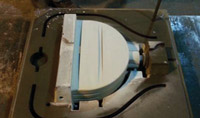
With 27- years in the manufacturing industry under my belt, my advice on this would be as follows:
1) Never stop learning. Being called a subject matter expert is often considered an honor but can also identify an individual on a team who is no longer learning!
2) Get plugged in to the rapidly changing advanced manufacturing industry through trade shows, research firms, colleges, publications, etc.
3) Get comfortable with failing and learn from it. Finding ways not to do something is often just as illuminating as finding how to do it.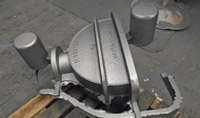
4) Learn to accept change and be suspicious of the “how we’ve always done it” crowd.
5) Begin developing “To Done” lists. Ask yourself, what will this process, project, or facility look like once all is implemented? Then fill in the steps it will take to achieve those results. Those blank steps in the project plan for unknown solutions are the areas where research and trials will lead you to new discoveries.
6) “DO OR DO NOT. THERE IS NO TRY”- Yoda.
With the rapid changes happening in our industry, there has never been a more exciting time to be in the engineering profession. Find out what is out there and how it can make your products and processes better in the future.

Manufacturing Technology Insights Weekly Brief
Be first to read the latest tech news, Industry Leader's Insights, and CIO interviews of medium and large enterprises exclusively from Manufacturing Technology Insights
