

THANK YOU FOR SUBSCRIBING
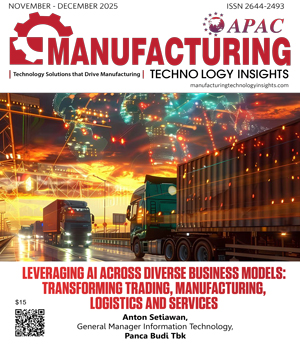
In today's fast-paced and ever-evolving business landscape, the adoption of Artificial Intelligence (AI) has become increasingly vital for companies looking to stay competitive and drive innovation across various sectors. From trading and manufacturing to logistics and services, integrating AI into business operations offers a plethora of opportunities to enhance efficiency, optimize processes, and unlock new avenues for growth. In the realm of trading, AI technologies such as machine learning algorithms and predictive analytics are revolutionizing decision-making processes. By analyzing vast amounts of data in real time, AI-powered trading systems can identify patterns, trends, and market signals that humans might miss. This enables companies to make more informed investment decisions, minimize risks, and capitalize on market opportunities swiftly. Moreover, AI-driven trading platforms can automate repetitive tasks, streamline workflow processes, and execute trades with greater speed and accuracy. This not only improves operational efficiency but also enables traders to focus their expertise on strategic decision-making and portfolio management. In the manufacturing sector, AI-powered technologies offer significant potential for process optimization, quality control, and predictive maintenance. By leveraging AI-driven predictive analytics, manufacturers can forecast demand, optimize production schedules, and manage inventory levels more effectively. This ensures that resources are allocated efficiently, reducing waste and maximizing productivity. AI-enabled robotics and automation systems further enhance manufacturing efficiency by streamlining production lines, reducing cycle times, and minimizing errors. Collaborative robots (cobots) equipped with AI capabilities can work alongside human workers, performing repetitive tasks with precision and flexibility while improving overall safety in the workplace.
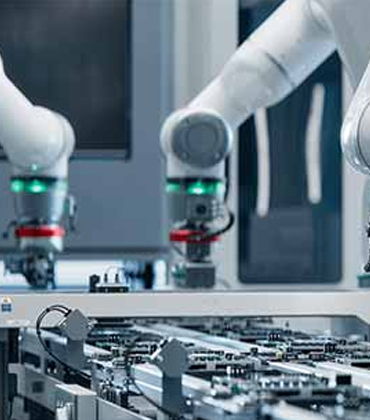
The manufacturing landscape is evolving at an unprecedented pace, fueled by innovation, intelligence and integration. Leading this new wave of smart manufacturing is ViTrox Corporation, whose V-ONE Manufacturing Intelligence Solutions are helping industries move confidently toward the connected, intelligent future of Industry 5.0. Integrating IoT, digitalization, data analytics, AI, manufacturing execution system (MES) and Enterprise Resource Planning (ERP) within a single, cohesive ecosystem, it enables manufacturers to monitor, analyze and optimize every process. V-ONE’s brand-agnostic connectivity allows clients to consolidate data, track job statuses and measure cycle times across machines from any equipment brand. ViTrox’s subject matter expertise and operational credibility underpin it all. As an experienced manufacturer in discrete sectors like back-end semiconductor and SMT PCB assembly, the company applies deep operational expertise to solve real-world problems using AI and image analytics. “Clients often call ViTrox their ‘most strategic partner in growth,’ not just for what the platform delivers, but for the effortless precision with which it executes,” says Wee Kah Khim, CEO of ViTrox’s Board Inspection and Embedded System. At the core of V-ONE lies the ProAct layer, a convergence of real-time AI intelligence and automated defect management that transforms raw machine data into actionable insight. Complementing this is the platform’s ONE View and intelligent Control Tower, which consolidates inspection data from multiple stages like SPI, AOI and AXI, giving manufacturers a complete, 360-degree perspective of their operations. Process Insight takes this a step further, enabling one-click tracking across machines, automatic alerts and even self-healing workflows. The result is faster identification and resolution of defects, an 83 percent reduction in root-cause analysis time and significant improvements in yield and throughput..


Mechanical engineer Chris Chang entered the manufacturing industry in 2003 with a successful collaboration with reputed marine navigation equipment maker Raymarine, where he provided exceptional and tailored mechanical parts. Word of his proficiency and impressive output spread across various markets. Subsequently, he established View Well International, a computer numerical control (CNC) firm that has since carved a niche as a one-stop mechanical parts supplier and supply chain management partner. The company has grown to over 550 staff members and 80 engineers who adeptly equip diverse industry verticals with bespoke, precisely designed parts that constantly exceed expectations. View Well is dedicated to providing high-quality and compliant offerings across a broad customer base. Equipped with ISO9001:2015, IATF6949:2016 and ISO13485:2016 certified services, it offers tooling, extrusion, die casting, gearbox assembly and finishing for automotive accessories, consumer electronic assembly, industrial products, telecommunication and medical parts. Customers are assisted with creating high-end manufacturing based on original or mutually created product blueprints. For clients who come to collaborate with 2D designs or only a concept, View Well leverages its skilled workforce to deliver accurate, on-demand 3D designs inspired by detailed discussions.
Ensuring immaculate cleanliness within vacuum chambers is imperative to uphold the semiconductor industry’s stringent quality standards. Maintaining pristine chambers can prevent outgassing and product damage caused by particle and chemical contaminants. In addition, cleaners must attain the desired cleanliness despite the diverse manufacturing processes and coating materials manufacturers employ. To address these risks comprehensively, NICH Technologies, a vacuum application service provider, uses various precision cleaning methods. NICH Technologies delivers comprehensive engineering solutions that meet the cleaning needs of the semiconductor industry. The firm is capable of handling most of the decontamination by-products on stainless steel, ceramic, and quartz surfaces. “Our expertise lies in refurbishing and cleaning vacuum chamber components, which are crucial for evaporator, sputtering and etching,” says Jimmy Fung, director at NICH Technologies. The company selects the most appropriate precision surface cleaning treatment solutions based on its clients’ manufacturing processes or the coating material.

Ceramic

Ari Wibowo, Lean and Advanced Manufacturing Senior Manager, New Balance
Industrial Automation

Andreas Kurz, Global Head of Digital Transformation, ALFAGOMMA Group
Industrial Automation

James He, Cybersecurity Director, L’Oréal
Industrial Automation

Scott White, Senior Manager Sales and Marketing Operations, Airbus
Industrial Automation

Athikom Kanchanavibhu, EVP, Digital & Technology Transformation, Mitr Phol Group

Industrial Automation
Sabina Janstrom, Chief Information Officer, Lactalis Australia

Industrial Automation
Dewi Fitriyati, Head of Business Development, PT Katolec Indonesia
The APAC region is shifting from efficiency to digital manufacturing, enhancing industrial sovereignty and trade resilience through AI, data governance, and strategic national policies.
APAC is rapidly adopting Digital Manufacturing to enhance precision, efficiency, and agility, driven by global competition and technological integration, setting new standards in manufacturing excellence.
Precision, Performance, and Progress in Manufacturing’s Digital Frontier
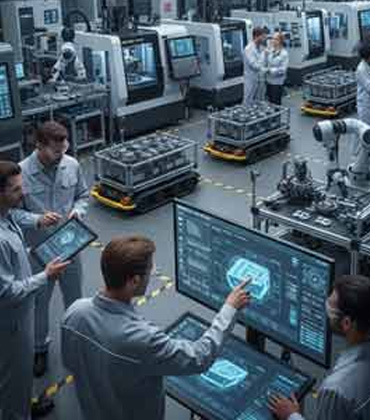
Factories are shifting from static operations to dynamic ecosystems powered by data, simulation and AI-driven control systems. Digital twins and predictive analytics are enabling real-time decision-making, minimizing downtime and optimizing resource use. Manufacturers are no longer being reactive, but are anticipating change before it happens. As these systems evolve, integrating cybersecurity and governance frameworks ensures that innovation scales responsibly and securely across the value chain.
Precision manufacturing, meanwhile, continues to redefine the benchmarks of quality. The region’s most advanced providers are combining traditional craftsmanship with machine learning, robotics and automated inspection systems to achieve levels of accuracy once thought unattainable. From aerospace to medical technology, the push for exactitude has given rise to new materials, micro-manufacturing methods and agile production models that adapt to customer-specific requirements while reducing waste and lead times.
Complementing this wave of digitalization is the evolution of industrial vacuum processing systems. Once niche tools, they are now at the center of advanced manufacturing, from semiconductor fabrication to clean energy production. Their precision in controlling environmental conditions is critical to the consistency and reliability of next-generation products. As sustainability becomes a regional priority, energy-efficient vacuum systems are setting new standards for clean, low-impact manufacturing.
Together, these advances reflect a sector defined by transformation rather than tradition. APAC’s manufacturing leaders are proving that progress lies in automation with adaptability, where technology, talent, and purpose converge to shape a more intelligent industrial future.
This edition also features insights from Athikom Kanchanavibhu, EVP of digital & technology transformation at Mitr Phol Group, and Andreas Kurz, global head of digital transformation at ALFAGOMMA Group, whose perspectives shed light on the leadership and innovation driving this evolution.

Manufacturing Technology Insights Weekly Brief
Be first to read the latest tech news, Industry Leader's Insights, and CIO interviews of medium and large enterprises exclusively from Manufacturing Technology Insights
