



THANK YOU FOR SUBSCRIBING
References to intelligence organizations often conjure up images of spies and secret agents, carrying out clandestine operations in far-off lands. However, "corporate intelligence" is distinct from espionage and is a growing field designed to help businesses mitigate risks, make better decisions, and identify opportunities. Corporate intelligence organizations are indispensable in the modern business environment. What is Corporate Intelligence? Corporate intelligence is a specialized form of business intelligence that centers on internal operations of a corporation or other business entity and their relation to external factors in the marketplace, global economy, and physical environment. It is the focused collection and analysis of facts and other information that responds to the needs of decision-makers and key advisors facing strategic challenges in a rapidly changing environment. In its most basic form, corporate intelligence is the collection, processing and analysis of disp
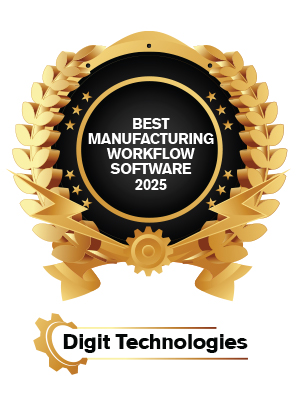
Digit Technologies is a forward-thinking startup on a mission to transform how manufacturers and distributors operate in an industry dominated by outdated ERP systems. Its platform unifies essential processes, including production, inventory, order tracking, procurement and shipping, into one intuitive interface to deliver real-time visibility, automation and collaboration. Unlike traditional ERP systems, which are slow to deploy, costly to maintain and often rigid, Digit is built for speed, flexibility and affordability, helping manufacturers go live in days. “We built Digit to be the all-in-one system—powerful enough to handle the complexity of manufacturing, but simple enough for anyone on the shop floor to use without training,” says Dan Koukol, CEO and co-founder. For years, manufacturers have patched together spreadsheets and siloed tools, making it hard to plan ahead, spot issues early or improve efficiency. Digit’s founders knew this problem well because they had lived it. Koukol spent nearly a decade working closely with manufacturers across the U.S. as a consultant, helping untangle bottlenecks and improve operational performance. Driven by a passion for hands-on problem-solving, he joined a struggling injection molding manufacturing business as the CEO and turned it profitable. In both roles, it became clear that no modern software tools were truly built for the realities of the factory floor. In 2021, Koukol and his co-founders launched Digit with a simple but ambitious idea: to build the system they always wished existed—a modern operating system for manufacturing, built by manufacturers, not just engineers..


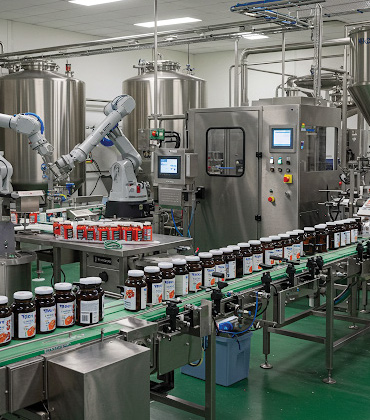
What happens when a bold innovator meets an outdated status quo that no one is willing to change? They rewrite the paradigm. That’s exactly what CJ Rapp did when he launched Karma Water back in 2011. “We are a solution to a problem that many consumers are don’t even realize exists,” says Rapp. The problem is a byproduct of traditional pre-mixed functional drink manufacturing, where ingredients are often hot-filled and left on shelves, exposed to varying climate conditions. Over time, this exposure steadily breaks down key ingredients like probiotics and vitamins, as it does in beverages like kombucha. This means consumers are not always getting the stated level of active ingredients. Karma Water, on the other hand, takes a bold step away from the conventional method by separating live probiotics in a hermetically sealed, patented push cap, which the consumer activates moments before drinking. This ready-to-mix design keeps sensitive ingredients separate from the water until the moment of consumption, delivering the consumer 100 percent of the intended benefits. The push cap technology works in tandem with a probiotic strain — the good bacteria Bacillus Coagulans GBI-30, 6086 (BC30®) — the beverage industry’s ‘gold standard’ probiotic. Developed by Kerry Foods, this strain is more readily bio-available than other offerings in the market. The company selected BC30® for its ability to survive the harsh digestive tract and deliver the benefits at the desired location to enhance nutrient absorption. By combining this strain with the patented push cap, Karma Probiotic Water remains stable for more than 18 months, ensuring two billion active probiotic cultures — 10 times more when compared to yogurts. It also contains six essential vitamins, all within 20 calories, providing a holistic wellness drink. The result is a stark improvement in the consumer’s gut health and immunity with every sip. Karma Probiotic Water is the go-to choice for health-conscious individuals seeking digestive support, immune-boosting vitamins, and overall wellness. The brand also offers a sustainable solution with its Karma Hydration Kits— customizable subscriptions featuring push caps paired with a reusable bottle. For those with busy lifestyles, Karma recently introduced convenient stick packs that deliver the same benefits in a more portable format. .
In a fast-changing world, staying competitive demands innovation at every stage of a product’s lifecycle. PTC stands at the forefront of this transformation, empowering businesses across industries to design, produce and maintain their products with precision and efficiency. From planes and medical devices to wind turbines and computers, its software solutions streamline engineering, manufacturing and operations to enable the creation of smart, connected products. Above all, PTC fosters collaboration, drives sustainable design, boosts service lifecycles and ensures customers are well-equipped to lead in a rapidly evolving landscape. “We will be disciplined and unemotional when it comes to prioritizing our time and resources on the products and product integrations that will create the most value for our customers. To use an analogy, we plan to put more wood beyond the most important arrows to ensure we drive the best outcomes for our customers,” says Neil Barua, President and CEO. Weaving The Digital Thread Originally focused on parametric design, PTC grew into a comprehensive provider of solutions spanning computer-aided design (CAD), product lifecycle management (PLM), application lifecycle management (ALM), augmented reality (AR) and the industrial Internet of Things (IIoT). These domains exemplify PTC’s commitment to equipping businesses with the tools and technologies needed to thrive in today’s competitive landscape. At the heart of PTC’s philosophy is ‘the digital thread’ that connects data, systems and stakeholders across the entire product lifecycle to create a unified, authoritative source of truth. In essence, its holistic approach facilitates real-time collaboration, reduces errors and enhances decision-making processes by ensuring that all relevant information is accessible and actionable. Beyond operational efficiency, the digital thread fosters innovation by equipping teams with insights and tools to iterate quickly and bring new ideas to market. This approach is complemented by its software solutions, which allow PTC to streamline every step of the journey, from initial design to end-of-life product management and ensure businesses can confidently meet their goals. Smart Solutions For A Connected Tomorrow PTC’s diverse and powerful portfolio caters to industries ranging from manufacturing and healthcare to aerospace and automotive. Its CAD solutions, including Creo and Onshape, are synonymous with precision and creativity. The company’s flagship 3D CAD software, Creo, equips engineers to design, simulate and optimize complex products with unparalleled accuracy. Meanwhile, Onshape, a cloud-native CAD platform, transforms product development through realtime collaboration and remote access. In the realm of PLM, Windchill, a powerful PLM software solution, provides a secure platform for managing product data and processes, enabling seamless collaboration across teams and geographies. For companies seeking a cloudbased approach, Arena, PTC’s cloud-native solution for PLM and Quality Management Systems (QMS), integrates PLM with quality management systems, offering an intuitive solution for streamlined operations. Similarly, PTC’s ALM solution, Codebeamer, supports industries like healthcare and automotive by integrating workflows and ensuring traceability to meet stringent regulatory requirements.


Ebony Travis Tichenor, Director, Global Well-being & HR Employee Policies, Boston Scientific

Anke E. Golde , Head of CTS Food & Nutrition, Americas, Roquette

Allie Ferrara, Sr. Director, HR Business Partner, Danone North America

Dina Fernandez, Global R&D Director – Alternative Proteins, Archer Daniels Midland (ADM)

Bridget Hawkins, Director of HR Compliance and Employee Relations, Hood Container

Jules Gianneschi, Chief Human Resources Officer, America’s CAR-MART, Inc

Fernando Garcia Vidal, Vice President of Engineering, Monogram Foods
The optimal nutrition industry is evolving through precision, automation, and sustainability, enhancing product quality and responding to consumer demands for healthy, environmentally responsible products.
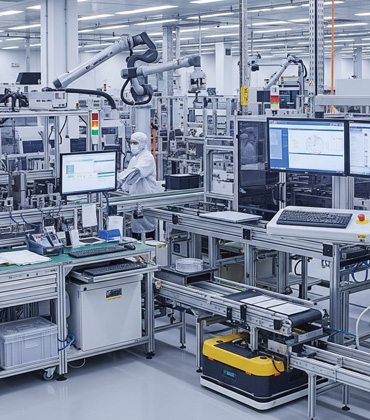
Manufacturing workflow software is evolving into intelligent systems essential for smart factories, driving efficiency, integration, and adaptability while embracing automation and Industry 4.0 technologies.
Sustainable Nutrition Meets Agile Manufacturing Innovation
Simultaneously, there is a strong market push toward plant-based and clean-label formulations, reflecting consumer expectations for transparency and environmental responsibility. Innovations in ingredient sourcing, including regenerative agriculture and lab-grown nutrients, are transforming product development and supply chain strategies. To remain competitive, companies must now adopt smarter, more agile operations.
This growing demand for flexibility and innovation is also accelerating advancements in manufacturing workflow software across the U.S. To support the complexities of personalized products and faster go-to-market expectations, nutrition brands and broader manufacturers are turning to next-generation workflow platforms. These platforms are powered by real-time data analytics, AI-based process optimization, and cloud-enabled collaboration tools.
Likewise, today’s manufacturing software solutions integrate seamlessly with ERP and supply chain management systems, enabling transparent, automated, and highly responsive operations. The shift toward modular and flexible manufacturing, especially vital for small-batch, specialized formulations, requires adaptive software that can orchestrate complex workflows with minimal disruption.
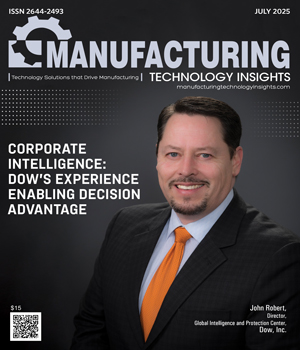
This edition highlights the expert perspective of John Robert, Director, Global Intelligence and Protection Center, Dow, Inc.
The magazine also contains the opinions of Denver N. Ritz-Vorwald, MSHRM, Head of Talent Development & Organizational Effectiveness at Hormel Foods, and Scott M. Danchise, Food Service Director at The Nutrition Group. These esteemed professionals share their invaluable insights on the developments and challenges within the sector, as well as possible solutions. We hope that the valuable insights from industry leaders featured in this edition will assist you in making informed decisions for your business.

Manufacturing Technology Insights Weekly Brief
Be first to read the latest tech news, Industry Leader's Insights, and CIO interviews of medium and large enterprises exclusively from Manufacturing Technology Insights
