

THANK YOU FOR SUBSCRIBING


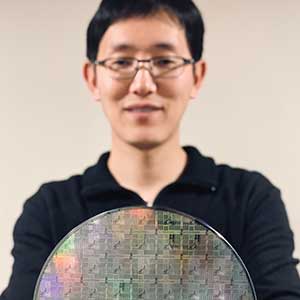 Bin Lu, CEO and Co-founder
Cambridge Electronics Inc. (CEI), an MIT spinout,is working on the next generation GaN technology to open a new realm of possibilities for power electronics and 5G communications. Founded by Professor Tomas Palacios and Dr. Bin Lu, a renowned professor-student duo of MIT, the company has pioneered a new way of making GaN devices through an innovative 3DGaN technology.
Currently, CEI is preparing to release its first-generation 3DGaN high voltage transistors for high efficiency and high power density power supplies. Recently, the company is selected as one of the finalists in the ARPA-E SCALEUP program to pilot production of its advanced 3DGaN FinFET technology in 8” US foundry for datacenter and 5G applications. With the challenging status quo in its DNA, CEI is poised to be a part of the energy revolution for the 21st century.

Company
Cambridge Electronics
Management
Bin Lu, CEO and Co-founder
Description
Cambridge Electronics Inc. (CEI), an MIT spinout, is working on the next generation GaN technology to open a new realm of possibilities for power electronics and 5G communications. Founded by Professor Tomas Palacios and Dr. Bin Lu, a renowned professor-student duo of MIT, the company has pioneered a new way of making GaN devices through an innovative3DGaN technology. Their innovative work has won the prestigious IEEE George Smith Award.Recently, CEI isselected as one of the finalists in the ARPA-E SCALEUP program to pilot production of its advanced 3DGaN FinFET technology in 8” US foundry for datacenter and 5G applications


Manufacturing Technology Insights Weekly Brief
Be first to read the latest tech news, Industry Leader's Insights, and CIO interviews of medium and large enterprises exclusively from Manufacturing Technology Insights
