


THANK YOU FOR SUBSCRIBING
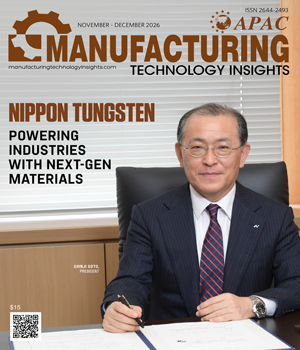
Electric vehicles, semiconductors, and next-generation manufacturing may seem like distinct sectors, but they share a critical foundation: the need for high-performance materials. Nippon Tungsten is at the heart of this convergence, a company that has been quietly transforming the material sciences landscape for nearly a century. As global competition intensifies, industries seek ways to enhance factory productivity and efficiency. To meet this demand, companies need durable, high-performing, and reliable materials customized for specific applications. Nippon Tungsten addresses these needs by leveraging its deep expertise in powder metallurgy, ensuring superior material performance across diverse industries. Founded on innovation in tungsten filament technology, Nippon Tungsten has continually expanded its capabilities— introducing ultra-conductive tungsten copper, high-strength tungsten carbide, and specialized ceramics now integral to mission-critical systems. Each new development reflects the company’s enduring commitment to pushing the boundaries of what advanced materials can achieve. “Our expertise goes beyond fine ceramics. Decades of research in powder metallurgy have allowed us to develop materials with exceptional durability and performance,” says Shinji Goto, President of Nippon Tungsten.
floors into intelligent ecosystems powered by real-time data, adaptability, and autonomy. Founded in 2008, the company has developed a platform that enables manufacturing sites to transition from automation to self-directed, data-driven operations. With more than 200 smart factory deployments across the semiconductor, chemical, shipbuilding, biotechnology, and precision manufacturing industries, GST has demonstrated repeatable success at scale. The company has played a central role in national smart factory initiatives, government-backed AI manufacturing projects, and consortium-led innovation programs, reinforcing its position as a long-term ecosystem partner rather than a single-use solution provider. “Our approach is based on the belief that modern factories must move beyond automation and toward true autonomous decision making,” says Juncheol Oh, CEO of GST. This vision translates into three core principles that guide GST’s platform. The foremost is real-time data intensity. GST collects high-frequency data from production equipment and environmental sensors with minimal latency, interprets it via edge computing and sensor fusion on-site and enables immediate, context-aware decisions instead of delayed, post-hoc analysis. The next is adaptive intelligence. Rather than relying on static rules, GST’s AI models continuously learn from operational data. Predictive maintenance, quality anomaly detection, and process optimization evolve in real time as conditions change, allowing factories to shift from reactive responses to proactive, self-optimizing control that improves overall equipment effectiveness.


Michael Walt II, Founder and President
LM3 Technologiesis redefining what’s possible in manufacturing inspection by delivering advanced, integrated AI vision systems that bridge the gap between reliability, traceability and full plant-floor integration. From catching surface-level cosmetic defects to orchestrating robot-guided inspections and closing gaps in legacy systems, LM3 is leading a new wave of production-ready, scalable AI vision. Founded in 2009 by Michael Walt II, LM3 Technologies emerged from decades of expertise in automotive electrical and seat system testing. Drawing from his experience building full-seat validation platforms and working alongside the world’s largest automotive OEMs, Walt founded LM3 with the goal of building smarter inspection tools for a wider range of industries. “Our goal has always been to create a practical, scalable solution that smaller and mid-sized manufacturers could actually implement—without sacrificing performance,” says Michael Walt II, founder and president. That philosophy led to the creation of QC Hero, LM3’s powerful AI training pipeline launched in 2017. Built for manufacturers, QC Hero enables companies to train defect detection models from their own part images and deploy them in hours, not weeks. The platform is cloud-based, leveraging Google Cloud TPUs to reduce training cycles from 24 hours to under two. At just $700 per model, QC Hero offers a dramatic cost advantage over enterprise solutions that start at $50,000+ and often lock customers into complex licensing models. “We created QC Hero and designed PAQi because we saw firsthand how difficult it was for manufacturers to get AI into production. Either the tools were too expensive, too slow, or just didn’t integrate with the rest of the plant. We wanted to make AI inspection something that actually works for real operators and engineers on the floor,” says Walt. LM3’s AI models run directly on PAQi: a model- and camera-agnostic, edge-deployed controller that serves as the heart of the LM3 ecosystem. PAQi can run up to six cameras, includes local storage via SQL and features built-in integration with industrial protocols like PROFINET, Modbus and Ethernet/IP. This architecture allows LM3 systems to fully integrate into existing PLCs, MES systems and line controls without custom middleware—a major differentiator from many vision companies that provide only standalone results or lack traceability.
Ceramic

Ari Wibowo, Lean and Advanced Manufacturing Senior Manager, New Balance
Fabrication

Daniel Kebriti, Head of Manufacturing Operations ANZ, Lush Cosmetics
Industrial Automation

Sabina Janstrom, Chief Information Officer, Lactalis Australia
Metal Working and Machine Tool

Larry Chan, Head of Digital, Asia, Aesop

Dr. Demet Karaali, Director / Head of IT - Product Development & Production, Daimler Trucks Asia

Oleochemical
Fauzi Baharin, Manufacturing Manager at Mondelēz International

Industrial Robotics
David Hermann, National Automation Program Manager, Goodman Fielder
ESS transforms the power electronics industry by improving energy efficiency, stabilizing grids, and integrating renewable energy sources.
Connected worker platforms enable faster decision-making, increased worker safety, and better workforce collaboration.
Data, Discipline, and Measurable Outcomes in APAC Manufacturing
At the center of this shift is execution. Our profile spotlights GST, recognized as the Top Smart Factory Solution 2026, for helping factories progress from basic automation to truly datadriven operations. Since its founding in 2008, the company has delivered more than 200 deployments across semiconductor, chemical, shipbuilding, biotechnology, and precision manufacturing environments. Its approach favors incremental modernization over disruptive overhauls, integrating ERP, MES, planning, quality, logistics, energy, and AI analytics into one connected operational layer through the PLUSWIN 6 platform. The result is practical and measurable: lower defect rates, faster response times, reduced energy use, and stronger throughput.
CXO perspectives in this issue reinforce that technology alone is not the differentiator. Structure and discipline are.
Dr. Demet Karaali, Director / Head of IT - Product Development & Production at Daimler Trucks Asia, shares how a 45-year-old enterprise with 50 subsidiaries approached ERP modernization through phased rollouts, deliberate change management, and realtime visibility. His takeaway is straightforward: scale comes from process clarity first, systems second.
Complementing this, Ari Wibowo, Lean and Advanced Manufacturing Manager at New Balance, outlines how lean principles paired with sensors, automation, and advanced planning tools are improving productivity and quality while strengthening workforce safety in high-variation environments.
Together, these stories point to a consistent truth. Smart factory leadership in APAC is not defined by how much technology is deployed, but by how reliably it delivers results. Discipline, integration, and measurable outcomes separate pilots from progress. We invite you to explore the models in this issue and apply what works to your own path toward scalable, intelligent manufacturing.

Manufacturing Technology Insights Weekly Brief
Be first to read the latest tech news, Industry Leader's Insights, and CIO interviews of medium and large enterprises exclusively from Manufacturing Technology Insights
