



THANK YOU FOR SUBSCRIBING
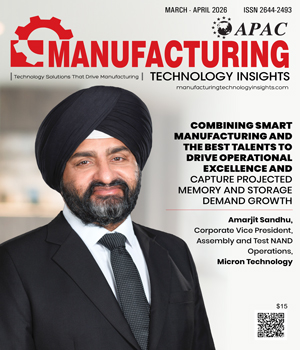
At the turn of the century, semiconductor memory and storage products made up 10 percent of the overall market. Two decades later, it commands close to 30 percent of the semiconductor market. We expect to witness exponential growth in the memory and storage sector in the next couple of years,at a rate faster than the projected growthof the semiconductor industry to $1 trillion by 2030. At the heart of this trajectory is the accelerated rate of digitalizationin recent years that enabled the shiftfrom the PC and internet era to smartphones and on to today's burgeoningdata and artificial intelligence (AI) economy. As we traverse the next generation of technologies, memory and storage becomeincreasingly central to enabling innovation such as cloud, data centers, mobile, networking, industrial technology, graphics, automotive, and high-performance computing. To address the projected growth trajectory, Micron establishes itself as a manufacturing powerhouse with highly skilled talents and world-class smart manufacturing technologies. Micron is present in 17 countries, with 11 manufacturing sites and 15 customer labs to serve our customers worldwide. In Malaysia, our manufacturing sites in Johor and Penang fill the critical role of assembly and testing in the Micron network. These sites strengthen and accelerate our ability to deliver world-class SSD technology, contributing to leading-edge technology for semiconductor assembly and testing for the latest 232-layer NAND components and SSDs. With energy being a critical enabler for Micron’s operations in Malaysia, we have deepened our commitment to sustainable practices. In April 2022, Micron Malaysia subscribed to the Green Electricity Tariff (GET) program – this enabled the sourcing of 100 percent renewable energy to power Micron’s operations and achieve a 100 percent reduction in carbon emissions – resulting in the removal of approximately 120,000 metric tons of carbon dioxide per year (equivalent to an
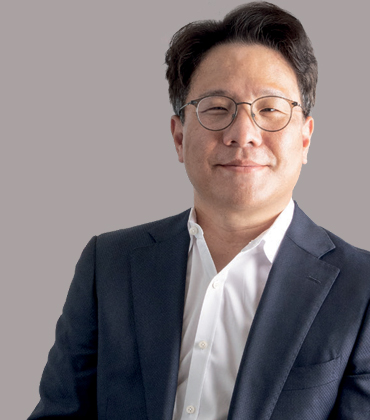
GST is a leading force in South Korea’s smart manufacturing landscape, transforming factory floors into intelligent ecosystems powered by real-time data, adaptability, and autonomy. Founded in 2008, the company has developed a platform that enables manufacturing sites to transition from automation to self-directed, data-driven operations. With more than 200 smart factory deployments across the semiconductor, chemical, shipbuilding, biotechnology, and precision manufacturing industries, GST has demonstrated repeatable success at scale. The company has played a central role in national smart factory initiatives, government-backed AI manufacturing projects, and consortium-led innovation programs, reinforcing its position as a long term ecosystem partner rather than a single use solution provider. “Our approach is based on the belief that modern factories must move beyond automation and toward true autonomous decision making,” says Juncheol Oh, CEO of GST. This vision translates into three core principles that guide GST’s platform. The foremost is real-time data intensity. GST collects high-frequency data from production equipment and environmental sensors with minimal latency, interprets it via edge computing and sensor fusion on-site and enables immediate, context aware decisions instead of delayed, post-hoc analysis. The next is adaptive intelligence. Rather than relying on static rules, GST’s AI models continuously learn from operational data. Predictive maintenance, quality anomaly detection, and process optimization evolve in real time as conditions change, allowing factories to shift from reactive responses to proactive, self-optimizing control that improves overall equipment effectiveness..

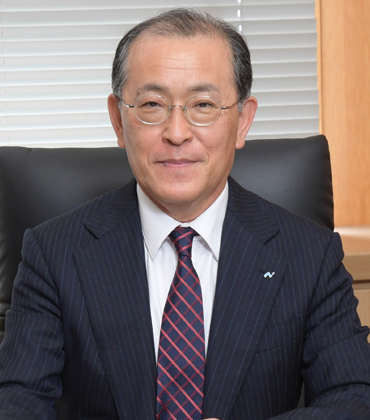
Electric vehicles, semiconductors, and next-generation manufacturing may seem like distinct sectors, but they share a critical foundation: the need for high-performance materials. Nippon Tungsten is at the heart of this convergence, a company that has been quietly transforming the material sciences landscape for nearly a century. As global competition intensifies, industries seek ways to enhance factory productivity and efficiency. To meet this demand, companies need durable, high-performing, and reliable materials customized for specific applications. Nippon Tungsten addresses these needs by leveraging its deep expertise in powder metallurgy, ensuring superior material performance across diverse industries. Founded on innovation in tungsten filament technology, Nippon Tungsten has continually expanded its capabilities— introducing ultra-conductive tungsten copper, high-strength tungsten carbide, and specialized ceramics now integral to mission-critical systems. Each new development reflects the company’s enduring commitment to pushing the boundaries of what advanced materials can achieve. “Our expertise goes beyond fine ceramics. Decades of research in powder metallurgy have allowed us to develop materials with exceptional durability and performance,” says Shinji Goto, President of Nippon Tungsten. A Key Player in Hard Disk Drive (HDD) Manufacturing When it comes to data storage, the performance of hard disk drives (HDDs) hinges on the quality of their components. Nippon Tungsten has been at the forefront of this domain, delivering advanced materials that enhance the durability and precision of HDDs. A standout innovation from Nippon Tungsten is its hard disk magnetic head substrate, crafted from a composite of alumina and titanium carbide (TiC). Initially developed for cutting tools, this material was later optimized for the HDD industry, offering exceptional wear resistance and stability. During the industry’s shift from bulk head to thin ceramic substrate in the 1970s—a transition paralleling semiconductor manufacturing techniques—Nippon Tungsten’s material was recognized for its superior properties, establishing the company as a key supplier.
Smart manufacturing leaders need real-time, scalable solutions to navigate increasingly complex factory environments where every second counts and every decision impacts efficiency, quality, and cost. Massive data streams are constantly generated, but without the right tools, converting them into actionable insights is slow, costly, and error-prone. The future lies in solutions that converge AI and OT to streamline workflows, improve decision-making, and move factories closer to true autonomous manufacturing. TEIA rises to this challenge. Evolving from a traditional OT-focused quality platform provider, the company has become a future-ready, AI-driven enabler of autonomous manufacturing. By converging AI with operational technology (OT), it empowers manufacturers to monitor, analyze, and optimize production environments with speed, precision, and confidence. “We are the preferred choice of customers because of our ability to propose and integrate various technologies for immediate action. Our expertise in creating customized smart factory solutions makes us more attractive,” says Choon Jae Lee, CEO. Customer-Centric Solutions and Proven Capabilities TEIA’s clients consistently cite three drivers of loyalty: real-time problem-solving, integrated OT-IT expertise, and a culture of accountability to the shop floor. Rather than simply delivering solutions, TEIA acts as a technical partner, addressing core production challenges and generating measurable gains in productivity and quality. Founded in 2015 to bridge OT and IT, TEIA addressed a critical gap: few IT experts understood the complexity of automotive production, and traditional MES platforms failed to unify fragmented “islands of information.” Its mission was to enable real-time, data-driven production. Over time, TEIA expanded from quality-focused OT systems to IoT device development and integrated solutions for vision inspection, fluid dispensing, and holistic quality management—setting the stage for autonomous, intelligent manufacturing. At the core is TEIA’s S-OTPlat platform, which integrates IoT devices such as S-Tag, S-Anchor, and Smart Connector to capture real-time data from equipment, products, and environments. Its RTLS tracks assets with high accuracy via UWB and BLE, with hybrid indoor/outdoor modules in development for complex factory zones. S-OTPlat also features AI video inspection, 3D digital twins for visualization and simulation, and integration with PLC, MES, and ERP systems—including legacy equipment—enabling digital transformation without disruption.
Electronics Manufacturing
Wilbertus Darmadi, CIO, Toyota Astra Motor
Smart Factory

Stewart Johnstone, Vice President Asia, Adient
Ceramic
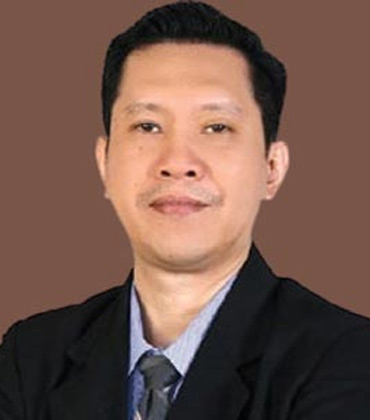
Ari Wibowo, Lean and Advanced Manufacturing Senior Manager, New Balance
Smart Factory

Rowen Wagner, Head Of Design, Moose Toys
Smart Factory

James JIAN, Head of Transportation, Package & Warehouse Management, Continental

Metal Working and Machine Tool
Athikom Kanchanavibhu, Executive Vice President - Digital & Technology Transformation, Mitr Phol Group
Smart Factory
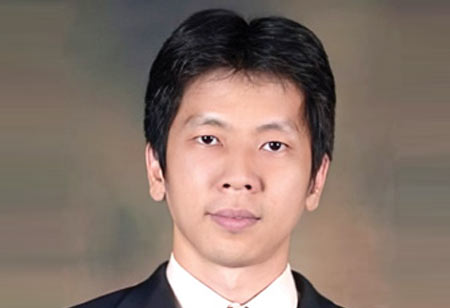
Anton Setiawan, General Manager Information Technology, Panca Budi Tbk
Smart factory solutions integrate cloud platforms, cybersecurity, and human–machine interfaces to enable secure, scalable, data-driven manufacturing operations.
APAC fine ceramics manufacturing is evolving toward higher value, disciplined investment, and performance-driven industrial demand.
Data, Discipline, And Measurable Outcomes in APAC Manufacturing
At the center of this shift is execution. Our profile spotlights GST, recognized as the Top Smart Factory Solution in APAC 2026, for helping factories progress from basic automation to truly data-driven operations. Since its founding in 2008, the company has delivered more than 200 deployments across semiconductor, chemical, shipbuilding, biotechnology, and precision manufacturing environments. Its approach favors incremental modernization over disruptive overhauls, integrating ERP, MES, planning, quality, logistics, energy, and AI analytics into one connected operational layer through the PLUSWIN 6 platform. The result is practical and measurable: lower defect rates, faster response times, reduced energy use, and stronger throughput.
CXO perspectives in this issue reinforce that technology alone is not the differentiator. Structure and discipline are.
Anton Setiawan, General Manager Information Technology at Panca Budi, shares how a 45-year-old enterprise with 50 subsidiaries approached ERP modernization through phased rollouts, deliberate change management, and real-time visibility. His takeaway is straightforward: scale comes from process clarity first, systems second.
Complementing this, Ari Wibowo, Lean and Advanced Manufacturing Senior Manager at New Balance, outlines how lean principles paired with sensors, automation, and advanced planning tools are improving productivity and quality while strengthening workforce safety in high variation environments.
Together, these stories point to a consistent truth. Smart factory leadership in APAC is not defined by how much technology is deployed, but by how reliably it delivers results. Discipline, integration, and measurable outcomes separate pilots from progress. We invite you to explore the models in this issue and apply what works to your own path toward scalable, intelligent manufacturing.

Manufacturing Technology Insights Weekly Brief
Be first to read the latest tech news, Industry Leader's Insights, and CIO interviews of medium and large enterprises exclusively from Manufacturing Technology Insights
