



THANK YOU FOR SUBSCRIBING
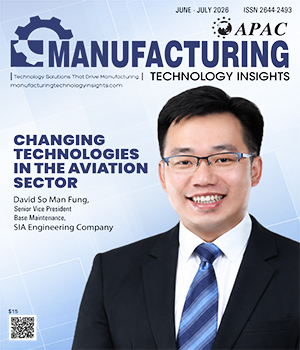
Digital Transformation within the Aviation Sector and Key Objectives You Achieve in Terms of Innovation and Technological Advancement Digital transformation is not a standalone project. It is important to align its objectives with the company’s business strategies. In SIAEC, our digital transformation initiatives aim to deliver value in operational excellence, customer intimacy and service innovation. In each of our specific plans to achieve these end goals, we measure our progress and outcomes in the areas of technology foundation, digitalization of operations, pervasiveness of digital cultures (e.g., agile, data, UX, innovation), staff experience and cyber security, just to name a few. Experiences from One of the Initiatives That You Were Recently Involved In One notable example of a recent SIAEC digital transformation initiative would be the creation of eLITE, which is a suite of applications developed in-house to support the growing line maintenance (LM) operations. Our LM staff embarked on a series of training in software development, agile, design thinking, and user experience to develop eLITE from scratch, transforming the business and IT relationship from transactional to collaborative. eLITE has helped the LM team significantly improve its operational efficiency through collaborative planning, real-time operations awareness and alerting, task prioritization and tracking, and assisting Technicians and Engineers with information and support on the go. “The Best Solution To A Business Pain Point May Not Even Be A Digital One” Emerging Technologies in Aviation, Such as Supersonic Travel or Electric Vertical Take-off and Landing (VTOL) Aircraft, That Intrigue You the Most With the difficult time of the pandemic behind us, I am thrilled by the changes taking place around us. Digitalization of MRO tasks, for example, will transform the way we work, and I am eager to see how much productivity and efficiency it will bring to the MRO
George, Founder and Chairman
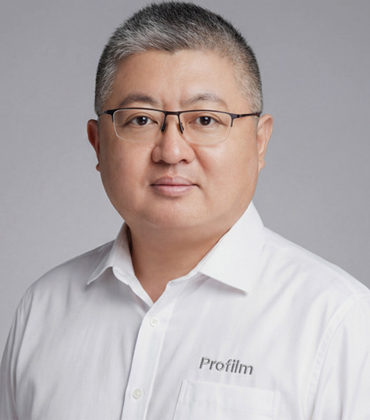
Protective films are no longer defined by scratch resistance. They are engineered as automotive components, expected to perform alongside the surfaces they protect. Profilm Advanced Materials Co., Ltd builds protective films for this reality. Recognized as the Top Automotive Window and Paint Protection Film Manufacturer 2026, it treats every product as an engineered automotive component. “We regard automotive films as automotive aftermarket products integrating materials science, automotive engineering and user experience, not merely 'plastic films' with scratch resistance,” says George, Founder and Chairman. That philosophy shapes every stage of operations, from raw material intake to the moment an installer applies film to a vehicle surface. Vertical Integration, Faster Results How does vertical integration improve consistency and speed in film manufacturing processes? Many film producers outsource key steps across fragmented supply chains. When control breaks, consistency breaks. Variations in material quality, coating uniformity and adhesive behavior translate directly into installation issues, higher rework rates and inconsistent long-term performance. Profilm applies a full-chain approach, controlling the lifecycle from laboratory formulation through production and global distribution. Research partnerships with the excellent postdoctoral workstation and the key enterprise research institute ensure that innovation in advanced film materials is directly channeled into manufacturing..

Electric vehicles, semiconductors, and next-generation manufacturing may seem like distinct sectors, but they share a critical foundation: the need for high-performance materials. Nippon Tungsten is at the heart of this convergence, a company that has been quietly transforming the material sciences landscape for nearly a century. As global competition intensifies, industries seek ways to enhance factory productivity and efficiency. To meet this demand, companies need durable, high-performing, and reliable materials customized for specific applications. Nippon Tungsten addresses these needs by leveraging its deep expertise in powder metallurgy, ensuring superior material performance across diverse industries. Founded on innovation in tungsten filament technology, Nippon Tungsten has continually expanded its capabilities— introducing ultra-conductive tungsten copper, high-strength tungsten carbide, and specialized ceramics now integral to mission-critical systems. Each new development reflects the company’s enduring commitment to pushing the boundaries of what advanced materials can achieve. “Our expertise goes beyond fine ceramics. Decades of research in powder metallurgy have allowed us to develop materials with exceptional durability and performance,” says Shinji Goto, President of Nippon Tungsten. A Key Player in Hard Disk Drive (HDD) Manufacturing When it comes to data storage, the performance of hard disk drives (HDDs) hinges on the quality of their components. Nippon Tungsten has been at the forefront of this domain, delivering advanced materials that enhance the durability and precision of HDDs. A standout innovation from Nippon Tungsten is its hard disk magnetic head substrate, crafted from a composite of alumina and titanium carbide (TiC). Initially developed for cutting tools, this material was later optimized for the HDD industry, offering exceptional wear resistance and stability. During the industry’s shift from bulk head to thin ceramic substrate in the 1970s—a transition paralleling semiconductor manufacturing techniques—Nippon Tungsten’s material was recognized for its superior properties, establishing the company as a key supplier.
The manufacturing landscape is evolving at an unprecedented pace, fueled by innovation, intelligence and integration. Leading this new wave of smart manufacturing is ViTrox Corporation, whose V-ONE Manufacturing Intelligence Solutions are helping industries move confidently toward the connected, intelligent future of Industry 5.0. Integrating IoT, digitalization, data analytics, AI, manufacturing execution system (MES) and Enterprise Resource Planning (ERP) within a single, cohesive ecosystem, it enables manufacturers to monitor, analyze and optimize every process. V-ONE’s brand-agnostic connectivity allows clients to consolidate data, track job statuses and measure cycle times across machines from any equipment brand. ViTrox’s subject matter expertise and operational credibility underpin it all. As an experienced manufacturer in discrete sectors like back-end semiconductor and SMT PCB assembly, the company applies deep operational expertise to solve real-world problems using AI and image analytics. “Clients often call ViTrox their ‘most strategic partner in growth,’ not just for what the platform delivers, but for the effortless precision with which it executes,” says Wee Kah Khim, CEO of ViTrox’s Board Inspection and Embedded System. At the core of V-ONE lies the ProAct layer, a convergence of real-time AI intelligence and automated defect management that transforms raw machine data into actionable insight. Complementing this is the platform’s ONE View and intelligent Control Tower, which consolidates inspection data from multiple stages like SPI, AOI and AXI, giving manufacturers a complete, 360-degree perspective of their operations. Process Insight takes this a step further, enabling one-click tracking across machines, automatic alerts and even self-healing workflows. The result is faster identification and resolution of defects, an 83 percent reduction in root-cause analysis time and significant improvements in yield and throughput.
Smart Factory

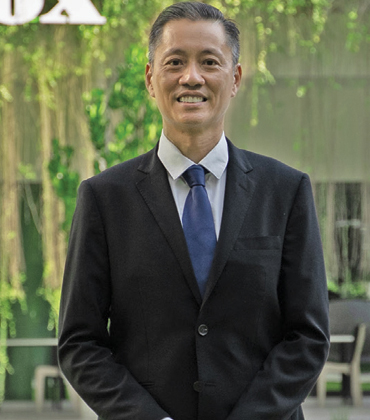
Stewart Johnstone, Vice President Asia, Adient [NYSE: ADNT]
Smart Factory

Carl Budd, Engineering Manager, Moose Toys
Electronic Assembly

Amarjit Sandhu, Corporate Vice President, Assembly and Test NAND Operations, Micron Technology [NASDAQ: MU]
Smart Factory
Suci Ameliya Reza Zairizal, Associate Manager, Novugen Pharma
Metal Working and Machine Tool

Daniel Kebriti, ANZ Manufacturing Director/APAC Strategy Lead, LUSH Fresh Handmade Cosmetics Australia and New Zealand
Metal Working and Machine Tool
Asha Nayaka, Communications and Employee Experience Lead, Colgate-Palmolive
Machine Vision

Wilbertus Darmadi, CIO, Toyota Astra Motor

Advanced Materials
Daniel R. Matlis, President, Axendia, Inc.
3D Printing
Andy Shang, Vice President of Engineering, Gold Medal Products Co.
IoT is transforming APAC manufacturing by enabling predictive maintenance, real-time monitoring, greater efficiency, improved safety, and data-driven, Industry 5.0–ready operations.
APAC manufacturers advance automotive window and paint protection films through innovation, quality control, sustainability initiatives, and strategic industry collaboration.
Engineering Consistency Across Advanced Manufacturing
Featured in this edition, Profi New Materials Co., recognized as the Top Automotive Window & Paint Protection Film Manufacturer in APAC 2026, approaches protective film manufacturing with an automotive engineering mindset rather than a conventional film-production approach. Its vertically integrated model connects material formulation, production, testing and distribution within a framework designed to reduce variability and improve consistency. By combining cleanroom manufacturing, durability testing and traceability systems, the company strengthens optical performance, installation reliability and lifecycle durability across automotive applications.
Industry perspectives throughout this edition further reinforce the growing role of intelligent manufacturing and operational discipline in modern production environments. Stewart Johnstone, Vice President Asia at Adient, highlights how lean manufacturing, decentralized operations and selective automation improve agility, reduce waste and strengthen supply chain resilience. Amarjit Sandhu, Corporate Vice President, Assembly and Test NAND Operations at Micron Technology, emphasizes the importance of smart manufacturing, AI-driven operations and sustainability integration in improving yield, efficiency and production responsiveness within semiconductor manufacturing environments.
Across APAC manufacturing sectors, operational resilience increasingly depends on how effectively organizations integrate automation, quality control and workforce capability into connected production systems. Manufacturers aligning engineering precision with scalable operational frameworks will be better positioned to adapt as industrial complexity grows.
We invite readers to explore the insights presented in this edition and evaluate how these manufacturing approaches can strengthen consistency and operational performance within their own environments.

Manufacturing Technology Insights Weekly Brief
Be first to read the latest tech news, Industry Leader's Insights, and CIO interviews of medium and large enterprises exclusively from Manufacturing Technology Insights
